• Published on

    Badgers out and about in winter!

    Badgers undoubtedly have a hard time.  There are still some disreputable types who would persecute them and find some inexplicable enjoyment in training dogs to fight, maim and kill them.  Many badgers die on out roads, and I have yet to see evidence that recent attempts to cull them have had any effect on bovine TB!

    For this reason, there is a need to keep survey data suitably vague, so that badger persecution is not encouraged.

    I was lucky enough to capture some badger activity recently on trail cameras set out relatively close to home.  It is a great joy to be able to capture these marvelous creatures on film and the use of trail cameras is increasingly used as a survey tool to monitor activity and identify patterns in behaviour.
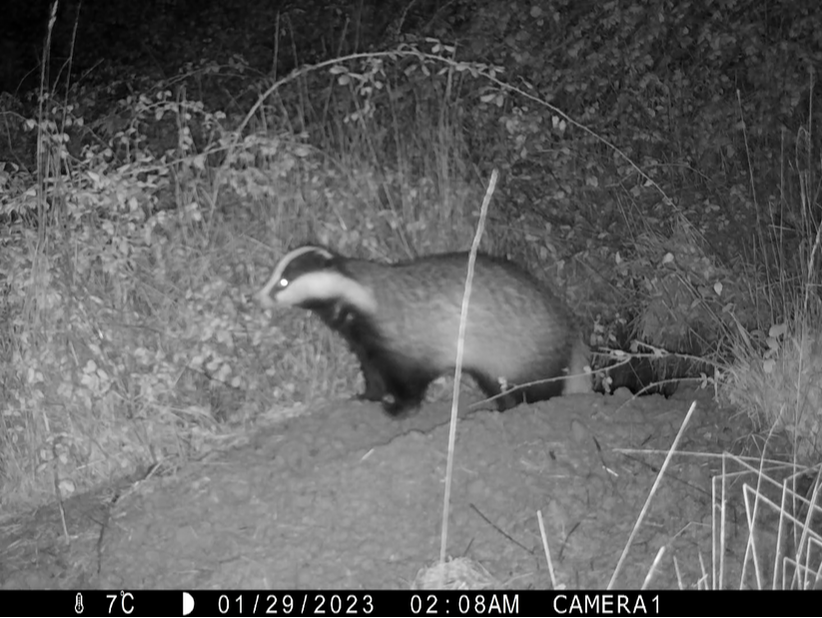
    Badger survey using trail camera with infra red sensor

    Badger emerging from sett

  • Published on

    Coronavirus - how it affects our work and undertaking ecological field surveys

    We are in difficult times with the unprecedented coronavirus pandemic imposing severe restrictions on individuals and businesses. 

    Huckle Ecology is a small business, and a single director-led company - in effect I am self-employed and currently ineligible for government support through the crisis. 

    However, working from home is the norm for me and so I can carry on providing remote services from home without having to alter working office-based working practices.  

    In relation for ecological surveys and site-based field work, I am pleased that 
    The Chartered Institute of Ecology and Environmental Management (CIEEM) has published some excellent advice on undertaking field work while observing the restrictions imposed by the Coronavirus.

    While these specifically refer to ecology surveys, they are also likely to be applicable to other field work. Advice may change if travel restrictions become tighter for example, but at present this advice seems sensible. I will be reviewing the need for, and where I consider the risk of contracting or spreading the virus can be avoided, carrying on with field surveys for the immediate future.

    At all times, though, I will ensure that social distancing is maintained and to ensure that the safety of everyone is not compromised. This will involved not engaging in face to face meetings, and reducing the need for travel as far as possible.

    We all have families and friends who are vulnerable and we all have a role to play in reducing the effects of the virus on our society!

    If you have any queries about how the coronavirus may affect your project need ecological advice then please do not hesitate to get in touch on 07496255050 or jon@huckleecology.com
  • Published on

    Natural England to Revoke General Licences for the control of 16 bird species

    Natural England has announced that it is revoking three General Licences for controlling wild birds, as of Thursday 25th April 2019.

    What does this mean?
    These licences have been used to kill wild birds, covering 16 species of birds including some of the crow family, Canada goose, some gulls and pigeons.  These licences were introduced to allow the legal control of certain species "...to protect public health and safety, prevent serious damage and protect plants and wildlife". However, the licensing regime was often abused and been subject to a recent legal challenge.

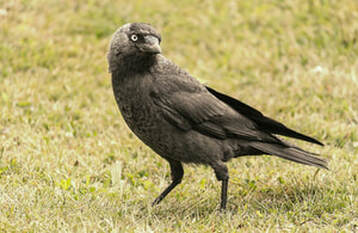
    Jackdaw - a bird covered by the revoked General Licences
    If you rely on a general licence to kill birds covered by the three licences being revoked (GL04/05/06), then you may not be acting lawfully if you continue to control birds.  Until then, anyone needing to control one of the 16 species will need to apply for an individual licence.

    The key change is that there may be a greater need to demonstrate that there are no reasonable non-lethal alternatives as part of an individual licence. 

    Further information can be obtained at the Natural England website:
    https://www.gov.uk/government/news/general-licences-for-bird-control-major-changes-to-licensing-requirements
    ​​
  • Published on

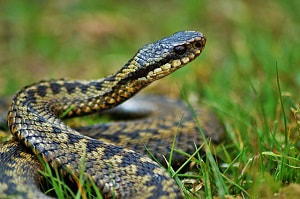
    Worrying declines in adder populations

    Eleven years of monitoring adder populations has provided evidence of what many ecologists have sensed for a long time - that one of our iconic reptiles, the adder is in serious decline. 

    The study showed that 90% of adder populations were small and declining with only 10 having large populations that were healthy.  Worryingly, there is a danger that in 10-20 years, the adder populations would become increasingly fragmented and isolated and this could lead to a serious risk of extinction.

    The risks to adders are multiple - they are in danger from mechanical cutting of vegetation and overgrazing which reduced the cover they need.  Adders often hibernate together and are site-faithful, returning to the same hibernation site year after year - this can make them vulnerable to the loss of such sites and potentially the loss of a whole adder population at the same time.

    In my view, there is an urgent need to increase the protection conferred to adders, which at the moment receive limited protection under the Wildlife and Countryside Act.

    The monitoring study was undertaken by the Amphibian and Reptile Groups of the UK (ARG UK) through the ‘Make the Adder Count’ project, a citizen science survey to monitor adder populations across the UK, and published in association with Reading University


    Picture
    The full research article, published with open access by the British Herpetological Society, can be found at https://www.thebhs.org/publications/the-herpetological-journal/volume-29-number-1-january-2019
  • Published on

    March on with the ecology surveys

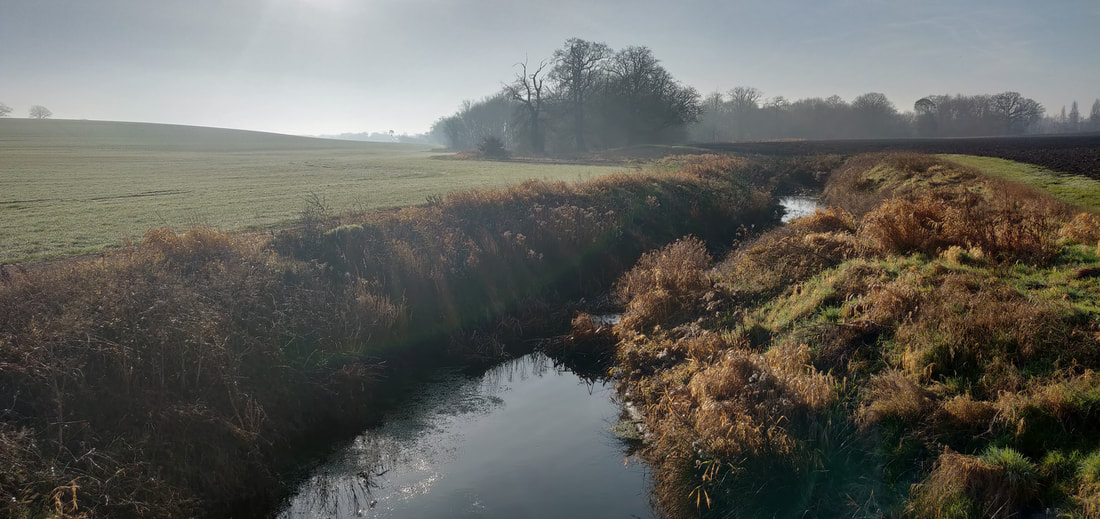
    Little Ouse headwaters between Redgrave and Hinderclay

    Misty morning in Redgrave, Suffolk

    Somehow, all of a sudden, January has passed effortlessly into February, which in turn has morphed into March, which can only mean that ecology surveys will start to pick up in frequency.

    It has been a bit of an odd winter - the mildness has been noticeable, with a few frosts but relatively little snowfall in our little corner of rural Suffolk.  At this time last year, we were getting blasted by the 'Beast from the East' which had a noticeable effect on delaying spring for much of our wildlife.

    At Huckle Ecology, the winter has been busy.... there have been a steady flow of preliminary ecological assessments, usually to inform planning applications. These include an extended Phase 1 Habitat survey, and aim to identify the potential ecological constraints and whether more detailed surveys for protected species such as bats, reptiles and great crested newts are required.  In addition, we have had wintering bird surveys to complete, involving surveys of an area to identify the use of that land by birds during winter.

    But now, attention turns to spring and at the end of March, the first breeding bird surveys are already in the schedule.  Many species are already actively seeking nest sites at the moment, and fully engaged in courtship and territorial behaviour - evidenced in our garden by the toing and froing of at least 4 male blackbirds all competing for our patch of choice shrubbery!
  • Published on

    Happy New Year from Huckle Ecology

    Its good to recharge the batteries....

    It has been great to unwind a bit over the Christmas and New Year break!  
    The chance to spend some quality time with the family and get away from the constant chatter of social media and the email conveyor belt is easily overlooked.  As the self-employed director of my own firm it is a really valued time of year.

    However, as an ecologist, it is hard to get away from the wonders of the natural world. 

    One of the highlights of our Christmas was a few days in Cheshire with family, where we enjoyed some gorgeous crisp winter sunshine.
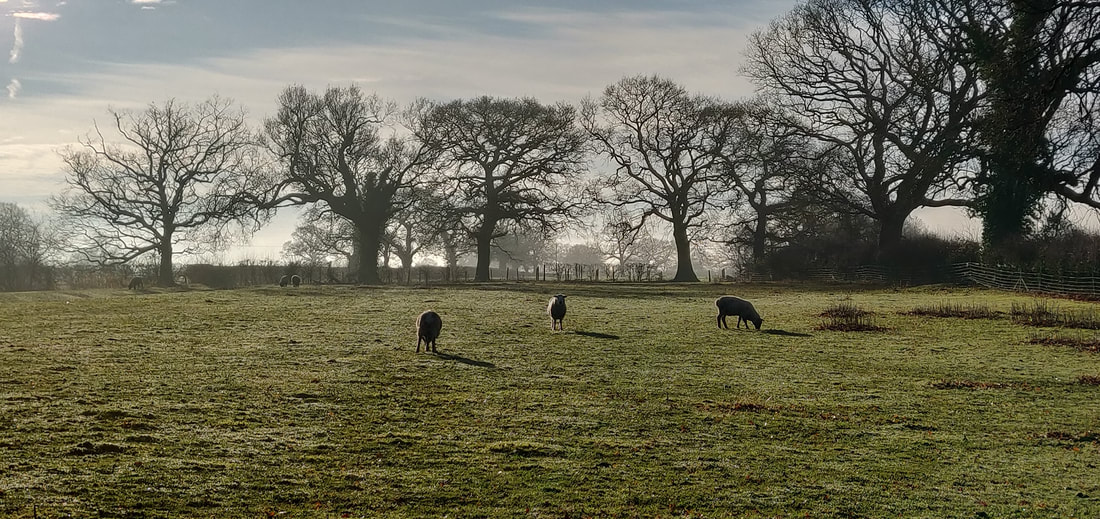
    Winter trees and grazed pasture in Cheshire

    Winter sun in rural Cheshire