The last couple of months have seen a flurry of reptile surveys on proposed development sites across Norfolk, Suffolk and Essex.
These surveys have included the use of artificial refuges (a mixture of roofing felt, roofing sheet and carpet tiles) deployed around potential development sites. These are then visited on repeat occasions and inspected for reptiles basking on the top of the refugia or sheltering underneath them. The key to these surveys is to be slow and stealthy in approaching them, as reptiles can vanish in a flash at the slightest movement or swish of clothing.
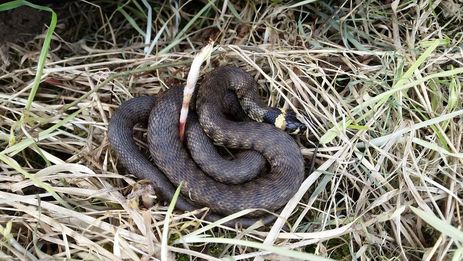
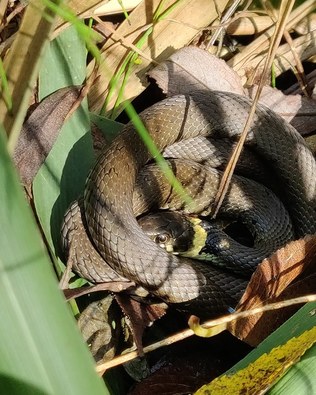
Ironically, I have seen more reptiles recently on proposed sites where I have been undertaking habitat survey, and recorded reptiles as incidental records. These have included a couple of glimpses of common lizard (perhaps quickest to scamper away) and a few sightings of grass snakes, which although relatively common are my favourite of our common reptile species.
These surveys have included the use of artificial refuges (a mixture of roofing felt, roofing sheet and carpet tiles) deployed around potential development sites. These are then visited on repeat occasions and inspected for reptiles basking on the top of the refugia or sheltering underneath them. The key to these surveys is to be slow and stealthy in approaching them, as reptiles can vanish in a flash at the slightest movement or swish of clothing.
Ironically, I have seen more reptiles recently on proposed sites where I have been undertaking habitat survey, and recorded reptiles as incidental records. These have included a couple of glimpses of common lizard (perhaps quickest to scamper away) and a few sightings of grass snakes, which although relatively common are my favourite of our common reptile species.
Reptile surveys are often required on potential development site as all reptiles in the UK benefit from legal protection. For the four common species (grass snake, adder, common lizard and slow worm) it is an offence to kill reptiles under the Wildlife and Countryside Act. Where a site supports a population, a reptile mitigation strategy can be developed to ensure that reasonable measures are put in place to prevent harm to reptiles and reduce the risk of an offence being committed.
Such mitigation can include the implementation or reasonable avoidance measures (or RAMs) or potentially the translocation of reptiles to a receptor site.
If you would like to know more about when surveys are required, feel free to get in touch via our Contacts page, or email Jon on jon@huckleecology.com
Such mitigation can include the implementation or reasonable avoidance measures (or RAMs) or potentially the translocation of reptiles to a receptor site.
If you would like to know more about when surveys are required, feel free to get in touch via our Contacts page, or email Jon on jon@huckleecology.com